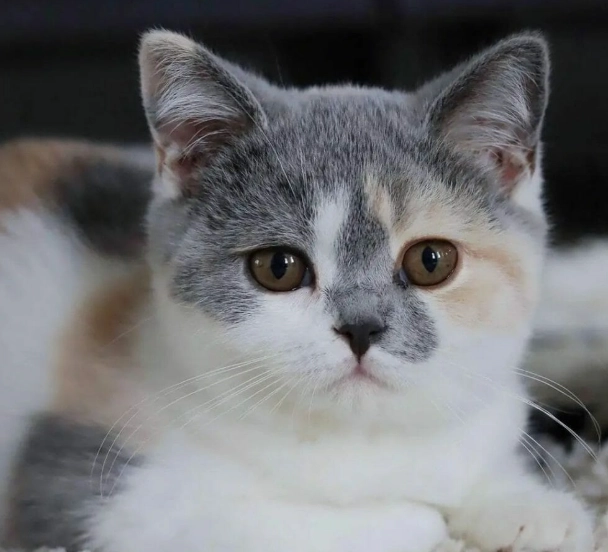
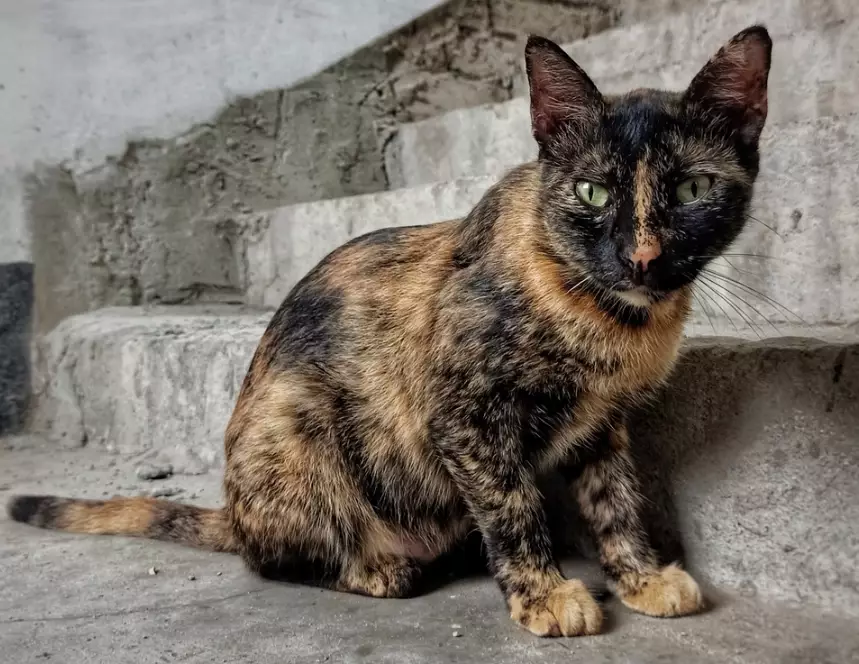
You see a cat with a stunning, mottled coat of black and orange, maybe with a little white. It's a tortoiseshell, or a calico if the white is prominent. And if you've been around cats for a while, you've probably heard the old adage: "All torties are girls." It sounds like an old wives' tale, doesn't it? But here's the thing—it's not. It's a hard fact of feline genetics. The rule holds so true that if you ever spot a tortoiseshell cat, you can be about 99.96% confident it's female. I remember the first time I explained this to a friend who swore her neighbor had a male tortie; the look of disbelief was priceless. Let's break down exactly why this is, and we'll also dive into those incredibly rare exceptions that prove the rule.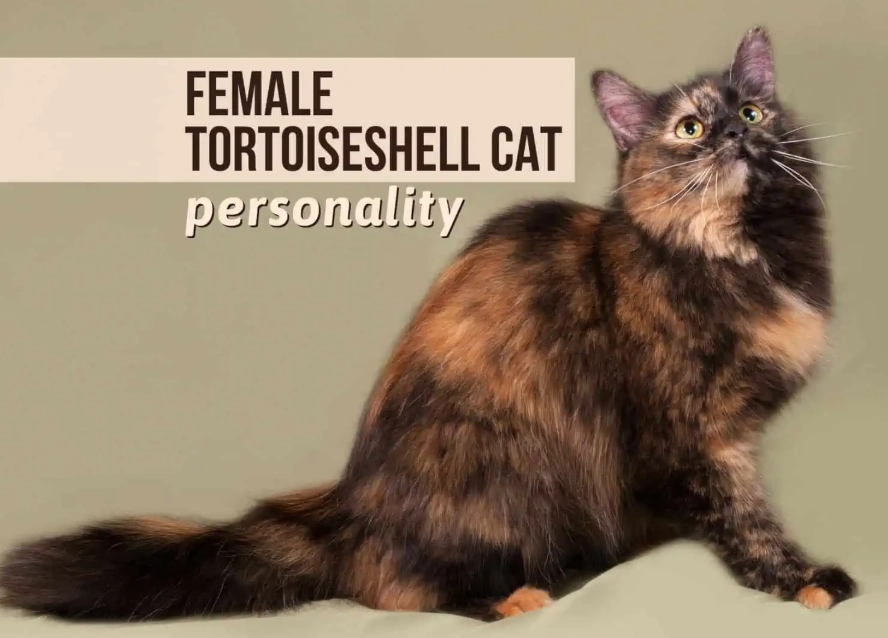
What You’ll Discover
The Genetic Blueprint: X Chromosomes and Coat Color
To understand tortoiseshell cats, you need to start with the basics of cat chromosomes. Just like humans, cats have pairs of chromosomes that determine their sex.
- Females (XX): They have two X chromosomes.
- Males (XY): They have one X and one Y chromosome.
The key player in our story is the orange gene. This gene, officially called the "O" gene, decides whether a cat's fur will be based on black pigment (eumelanin) or orange pigment (pheomelanin). Here's the crucial bit: this gene is located on the X chromosome. It's not on the Y chromosome at all.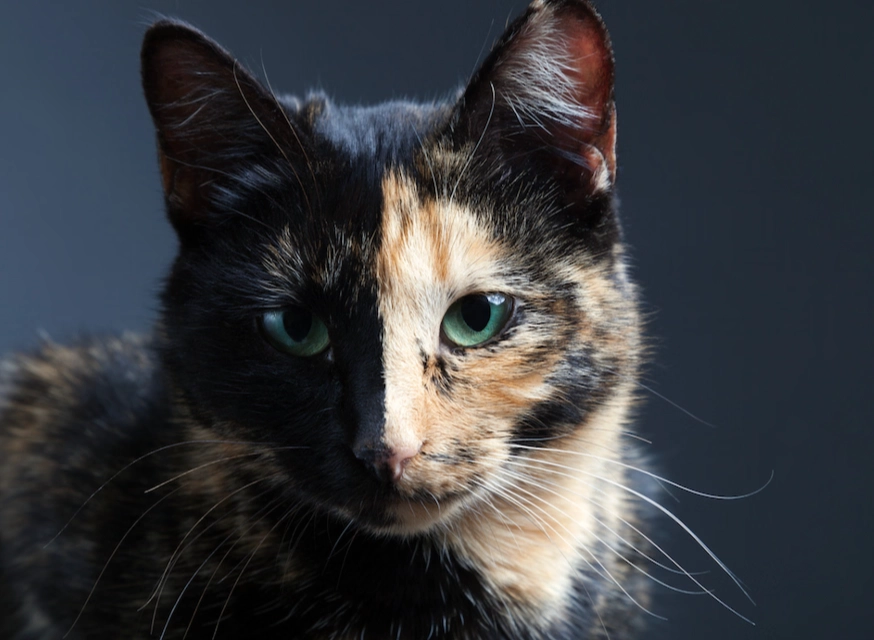
Think of the O gene like a light switch on the X chromosome. It has two main versions, or alleles:
| Gene Version (Allele) | What It Does |
|---|---|
| O (Orange) | Tells hair follicles to produce orange/red/cream pigment. |
| o (Non-orange) | Allows the hair to show the cat's underlying black/brown/gray pattern. |
So, a female cat (XX) inherits one X from her mother and one from her father.
She could get an O from one parent and an o from the other.
That means she has the genetic instructions for both orange fur and black fur. But having the instructions is only half the battle. How does her body decide to show both colors in that beautiful, chaotic mix? That's where things get really interesting.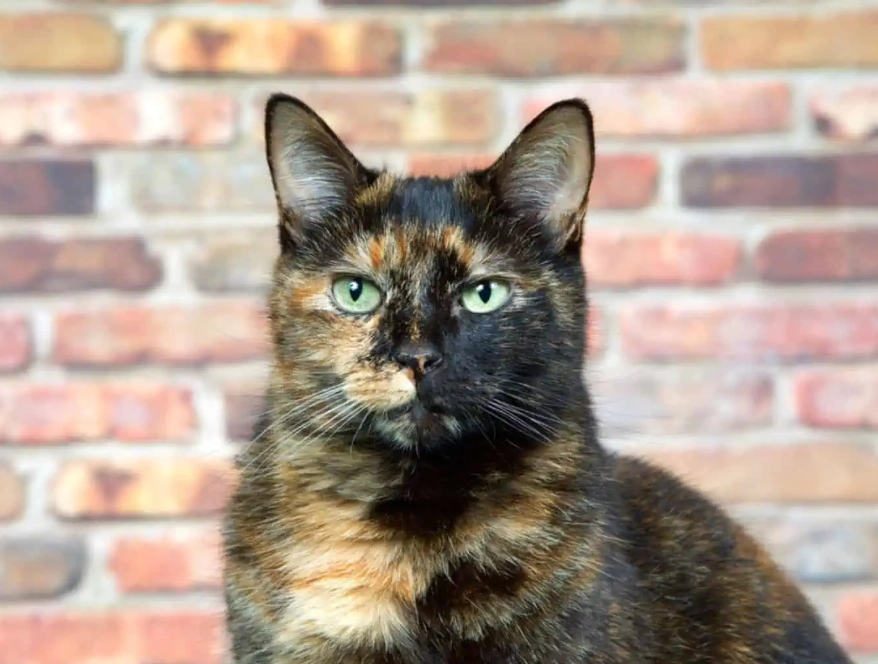
The Cellular Magic That Makes a Tortie
If a female cat has the O on one X and the o on the other, why isn't she just a muddy brown color? Why distinct patches of orange and black? The answer lies in a process called X-inactivation or lyonization.
Early in a female embryo's development, when it's just a tiny ball of cells, each cell randomly "turns off" one of its two X chromosomes. It's like each cell flips a coin: Mother's X or Father's X? The chosen X is condensed and silenced for that cell's lifetime. All the daughter cells that come from that original cell will have the same X chromosome inactivated.
Think of it this way: Imagine a painter with two sets of instructions: one says "paint orange," the other says "paint black." The painter shuts one set of instructions in a drawer in each room of a house. Rooms where the "orange" instructions are open become orange. Rooms where the "black" instructions are open become black. The cat's skin is the "house," and the patches of color are the "rooms" (clusters of cells).
This creates a living mosaic. Some patches of skin and hair follicles express the O allele (orange), and right next to them, other patches express the o allele (black). The size and distribution of the patches depend entirely on how the cells migrated and divided during embryonic development. This is why no two tortoiseshell cats are ever exactly alike—their coats are a unique map of their earliest cellular history.
What about male cats? A male (XY) has only one X chromosome. He can only have one version of the orange gene—either O (making him entirely orange/red) or o (making him a non-orange color like black, gray, or brown). He lacks the second X needed to carry the other color instruction. So, a standard male cat simply cannot be a tortoiseshell. His genetic canvas only has paint from one can.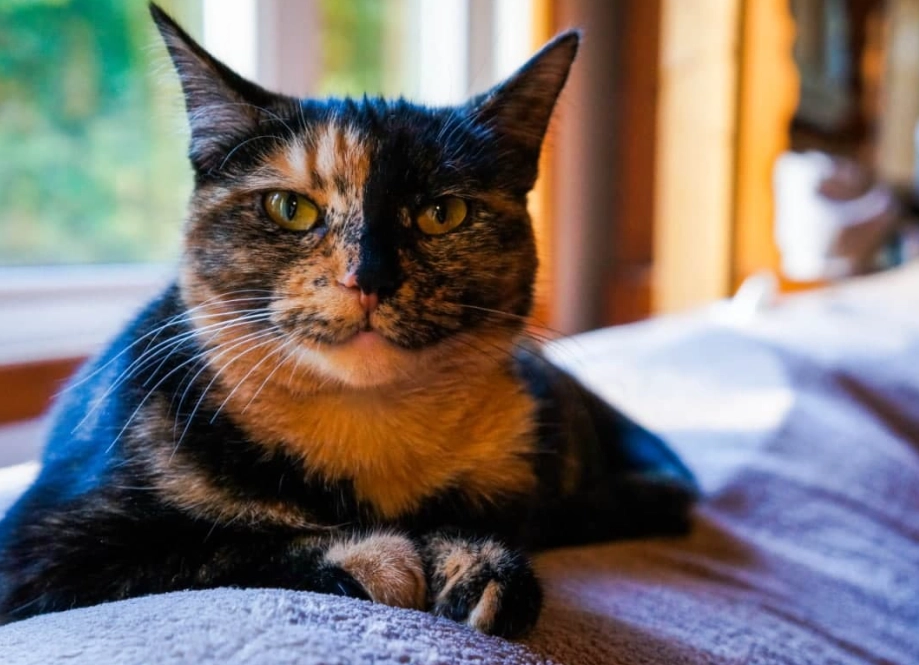
What About Male Tortoiseshell Cats?
Okay, so the rule is "always female." But biology loves an exception. Male tortoiseshell cats do exist, but they are extraordinarily rare—estimated at about 1 in every 3,000 tortoiseshell cats. Their existence requires a genetic anomaly.
The most common cause is Klinefelter syndrome. Instead of the normal XY, the male cat has an extra X chromosome, giving him an XXY karyotype. Now he has two X chromosomes, and if those Xs carry different O alleles (one O, one o), and if X-inactivation occurs, he can develop a tortoiseshell coat.
The Reality of XXY Male Torties
These cats are almost always sterile due to the chromosomal abnormality. They may also have other subtle health differences, though many live perfectly normal, healthy lives. The idea of a fertile, genetically normal male tortoiseshell is a persistent myth in some circles. While other, even rarer genetic mosaics (where some cells are XY and others are XXY) could theoretically produce a male tortie, the vast, vast majority trace back to that extra X.
If someone claims to have a male tortie, it's worth a second look. Sometimes, a tabby with heavy orange and black ticking (agouti hairs) can be mistaken for a tortie from a distance. But a true male tortoiseshell is a genetic marvel, and a veterinarian could discuss genetic testing to confirm the XXY condition.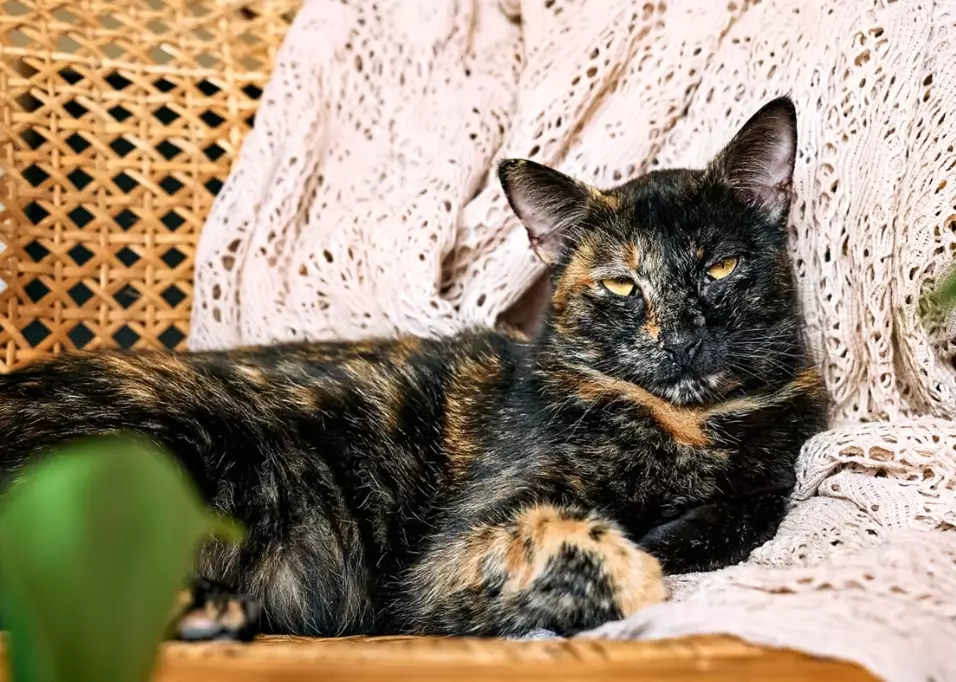
Tortoiseshell vs. Calico: What’s the Real Difference?
People use these terms interchangeably, but there's a clear genetic distinction. It all boils down to one more gene: the white spotting gene (S gene).
- Tortoiseshell ("Tortie"): Black and orange mixed with little to no white. The pattern is often described as brindled, where the colors are finely interwoven, or patched with larger, distinct blocks.
- Calico: Has significant, well-defined patches of white separating the black and orange areas. They appear tri-colored: white, black, and orange.
A calico cat is simply a tortoiseshell cat that also expresses the white spotting gene. This gene acts during development to prevent pigment cells from migrating into certain areas of the skin, leaving those patches white. It's like someone took the tortoiseshell mosaic and splashed big white paint blobs over it, breaking up the orange and black into larger, more isolated islands.
The same sex-link rule applies. Calico cats are also almost exclusively female because they require the same two-X genetic setup for the orange/black combination. Male calicos are just as rare as male torties and are caused by the same chromosomal abnormalities.
Your Tortoiseshell Questions Answered
So the next time you see that beautiful, patchwork cat sunning itself on a wall, you'll know you're almost certainly looking at a lady. Her coat is more than just pretty—it's a direct, visible readout of a fundamental genetic process, a story of cellular decision-making written in fur. It’s one of the most elegant examples of genetics in the animal kingdom, happening right there on your sofa. And if by some incredible chance you meet a male tortie, you’ve met a living lesson in how biology can, on rare occasions, bend its own rules.
 For those looking to dive deeper into the science, resources like the UC Davis Veterinary Genetics Laboratory offer fantastic primers on feline coat color genetics, expanding on the basic principles explained here.