Quick Navigation
You know that feeling when you see a cat that just stops you in your tracks? That was me, the first time I saw a Somali cat at a friend's house. It wasn't just a cat; it was this flowing, russet-colored creature with ears like a lynx and a tail like a feather boa. I thought, "What on earth is that?" Turns out, I wasn't alone in my surprise. The Somali is often called the "fox cat" or the "long-haired Abyssinian," and once you meet one, you'll understand why they're so unforgettable.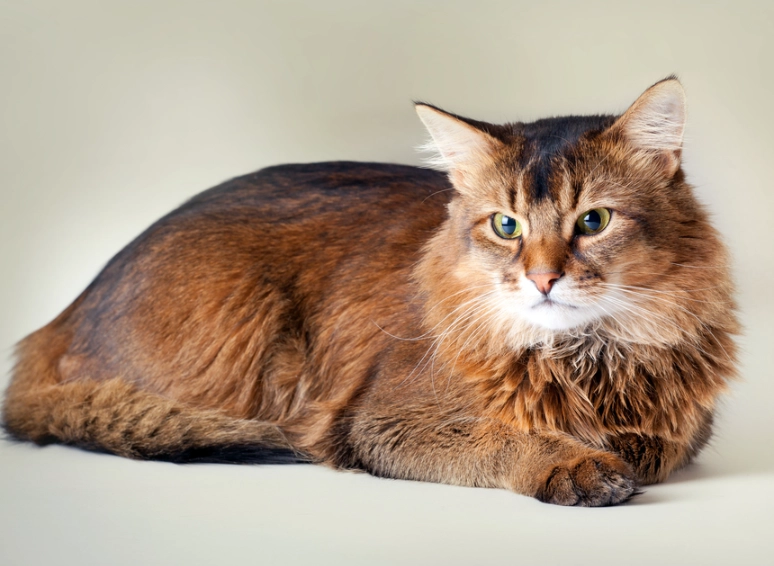
This isn't just another pretty face in the cat world. Owning a Somali cat is like having a permanent, four-legged toddler with the curiosity of a detective and the energy of a coiled spring. It's rewarding, hilarious, and sometimes utterly exhausting. If you're just browsing pictures and thinking about how stunning they are (and they are), or if you're seriously considering bringing one of these fiery-maned companions home, you've got questions. I had a ton. Are they high-maintenance? How smart are they, really? Will they get along with my kids or other pets?
Let's cut through the fluff and get real about what life with a Somali cat is actually like. This guide is everything I wish I'd known, packed with details from breeders, owners, and my own experiences watching these captivating cats.
So, What Exactly Is a Somali Cat?
Let's clear up the biggest confusion right away. The Somali cat is essentially the longhaired version of the Abyssinian. It's not a separate species that was discovered in Somalia. The long hair is the result of a recessive gene popping up in Abyssinian litters. For decades, these fluffy kittens were quietly placed as pets, considered little more than a breeding "mistake." It wasn't until the 1960s that breeders, particularly in North America, looked at these cats and thought, "Hey, wait a minute... this is actually beautiful. This is a feature, not a bug."
They started selectively breeding for that gorgeous, medium-long coat, and the Somali was officially recognized as its own breed. The name "Somali" was chosen as a nod to the African origins of its Abyssinian cousin (Abyssinia being the old name for Ethiopia, Somalia's neighbor). It’s a bit of poetic license, but it stuck. You can read about the formal breed history and standards on The International Cat Association (TICA) Somali breed profile.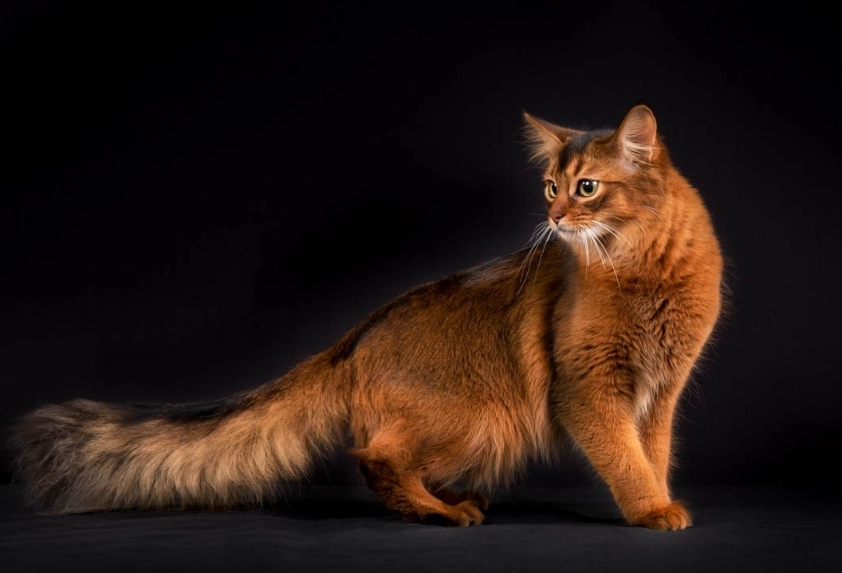
The core of the Somali cat is pure Abyssinian—the same lithe body, the same large, alert ears, and most importantly, the same brilliant, inquisitive mind. The coat is what sets them apart, transforming them from sleek athletes into regal, plush creatures.
The "Fox Cat" Look: Breaking Down Their Appearance
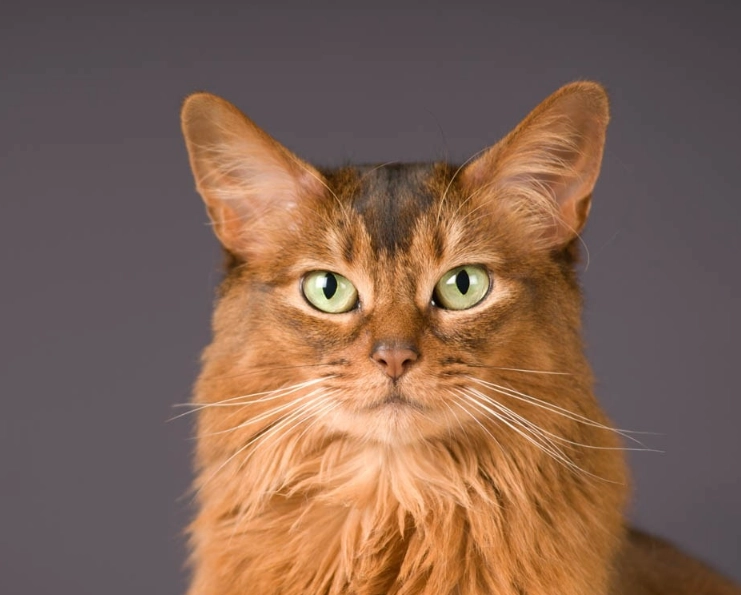
Calling a Somali cat "fluffy" is an understatement. It's a specific kind of glorious. The coat is fine, super soft, and lies relatively close to the body. It's longest around the ruff (giving them a fabulous lion-like mane), on the britches (the back of the thighs), and of course, on that incredible tail.
Ah, the tail. It's full, bushy, and carried with a proud arch. It's their signature accessory. When a Somali cat is on the move, that tail flows behind them like a banner.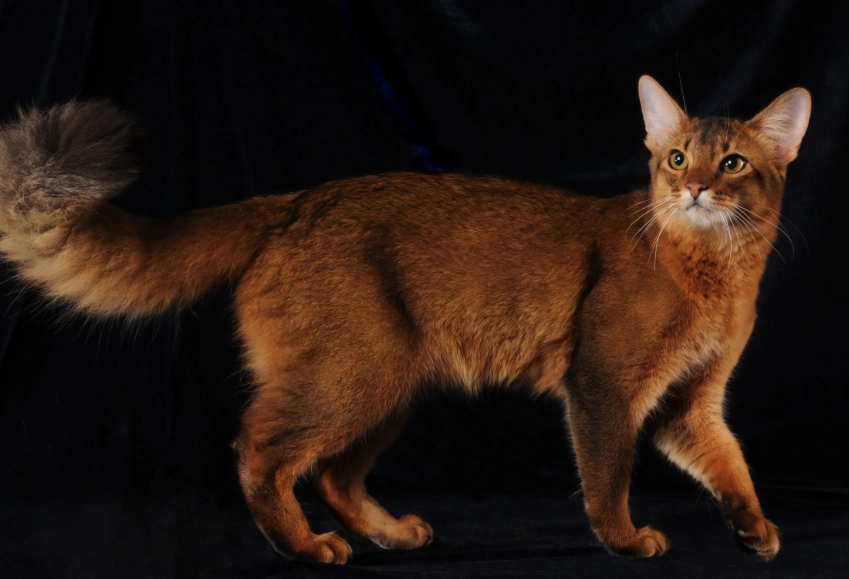
The Magic of Ticking
The most defining feature of both Somali and Abyssinian cats is their ticked tabby coat. This isn't stripes or spots. Each individual hair has 4-6 bands of alternating light and dark color. The tip is always the darkest. This creates a warm, shimmering, almost iridescent effect with no obvious pattern—just a beautiful, even glow of color. It's like each hair is a tiny piece of agate. Sunlight on a Somali cat is a show in itself.
Their colors are rich and warm. The most common and classic is ruddy (often called "usual" or "tawny"). It's a burnt orange base with black ticking—the quintessential "fox" color. But there are other stunning variations:
- Red (Sorrel): A cinnamon or apricot base with chocolate brown ticking. Warmer and lighter than ruddy.
- Blue: A soft, warm beige or oatmeal base with slate blue ticking. Incredibly elegant and subtle.
- Fawn: A light, rosy cream base with light cocoa ticking. Delicate and beautiful.
Their eyes are the perfect finishing touch: large, almond-shaped, and expressive. They range in color from gold to green, and they always seem to be taking in every detail of their surroundings. The overall impression is one of wild elegance—like a miniature cougar that decided to live in your house.
Personality: Not a Lap Cat, But a Life Cat
Here's where you need to be brutally honest with yourself. If you want a cat that will sleep 20 hours a day and occasionally grace you with a purr, a Somali cat is not for you. I cannot stress this enough. Their beauty is matched, and perhaps even exceeded, by their brains and energy.
Owning a Somali is an interactive experience. They are famously, intensely people-oriented. They don't just want to be in the same room as you; they want to be involved in what you're doing. Cooking dinner? Expect a supervisor on the kitchen counter. Working on your laptop? Prepare for a paw on the keyboard. Reading a book? That book now has a cat-shaped bookmark.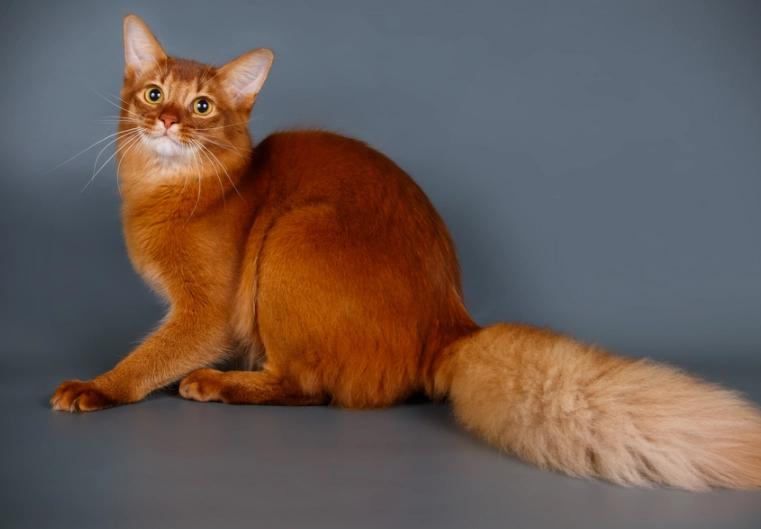
They are incredibly playful, retaining their kitten-like curiosity well into old age. A crumpled piece of paper, a ping-pong ball, a feather wand—they'll turn anything into a game. And they're smart. Scary smart. They learn to open doors (lever handles are no challenge), figure out puzzle feeders in minutes, and can be taught tricks like fetch, high-five, or even navigating agility courses. This intelligence means they get bored easily. A bored Somali cat is a creative Somali cat, and their creativity often involves redecorating your shelves.
Vocalization is another trait. They aren't loud, yowling cats, but they are communicative. They have a soft, pleasant chirp or trill that they use to comment on everything. It's a constant, gentle dialogue. You'll find yourself talking back to them without even thinking about it.
A Word of Caution
Their high energy and need for engagement mean they are not ideal for people who are away from home for 10+ hours a day without any plan for enrichment. They can develop anxiety or destructive behaviors out of sheer boredom and loneliness. Many Somali cats do best with a feline companion (another active breed or even another Somali) to keep them company. A solo Somali in an empty apartment is often a sad Somali.
But if you can meet their needs? The reward is a companion of unparalleled loyalty and entertainment. They greet you at the door. They make you laugh daily. They bond deeply with their family. They're more like a dog in a cat's body than almost any other breed I've encountered.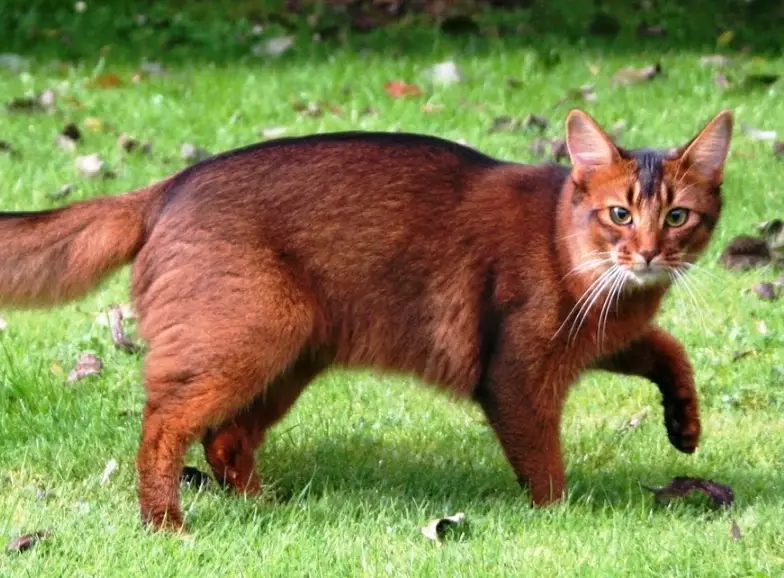
Somali Cat vs. Other Active Breeds: A Quick Comparison
How does the Somali's personality stack up against other known "busybody" breeds? Here's a quick, real-world take.
| Breed | Energy Level | Key Personality Trait | Best For Someone Who Wants... |
|---|---|---|---|
| Somali Cat | Very High | Inquisitive, "helpful," deeply attached to people. | A shadow, a perpetual participant in life, a clever companion. |
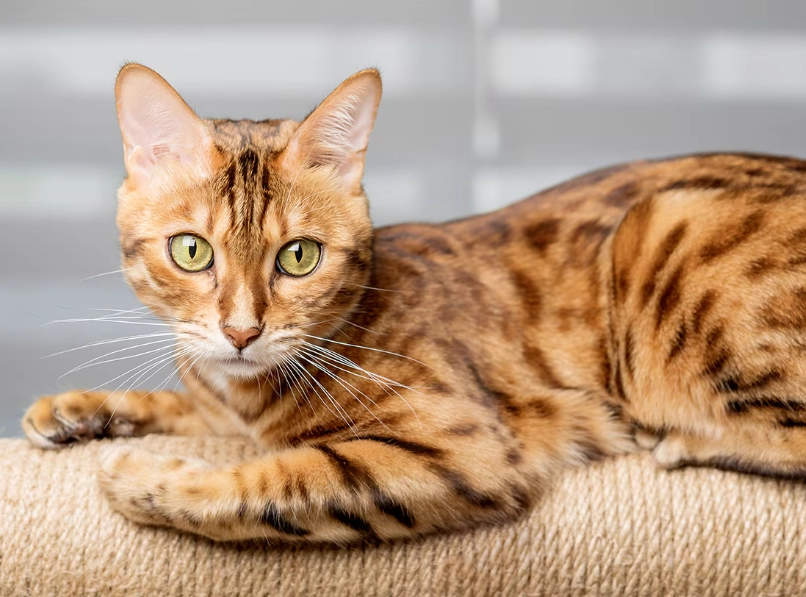
| Bengal | Extremely High | Confident, athletic, water-loving, can be demanding. | A live-in athlete, a cat with a wild look and presence. |
| Abyssinian | Very High | Exactly like the Somali, but in a sleeker package. Slightly more "on the go." | All the Somali smarts and energy, with slightly less grooming. |
| Siamese | High | Vocal, opinionated, social, form intense bonds with one person. | A talkative best friend, a cat with a lot to say. |
| Savannah | Extremely High | Dog-like, loyal, needs immense space and engagement. | The ultimate interactive pet, almost like a hybrid experience. |
Practical Care: What Does a Somali Cat Really Need?
Okay, you're smitten with the personality. But can you handle the upkeep? Let's get into the nitty-gritty of daily life with a Somali.
Grooming: It's Easier Than You Think
Here's the good news: that magnificent coat is surprisingly low-maintenance. Unlike Persians, the Somali's fur doesn't have a dense undercoat that mats easily. The texture is fine and silky. Most owners find that a thorough combing once or twice a week with a good quality steel comb is enough to remove loose hair, prevent tangles (especially in the ruff and britches), and keep that coat shining.
They do shed, of course. You'll find fine hairs around, but it's not the tufty, tumbleweed shedding of some breeds. During seasonal changes (spring and fall), they'll blow their coat and need more frequent combing—maybe every other day. Baths are rarely needed unless they get into something messy. Their fastidious nature usually keeps them spotless.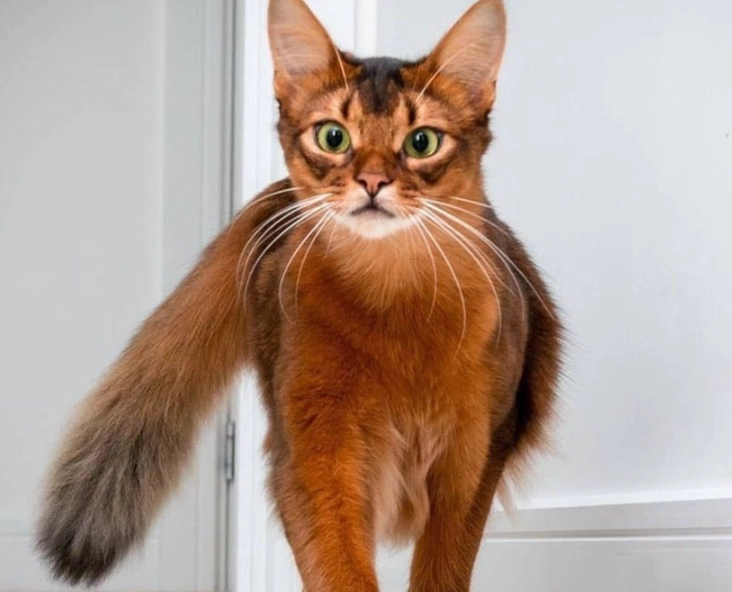
Pro Grooming Tip
Start grooming early when they're kittens. Make it a positive, treat-filled experience. A Somali cat who sees the comb as part of a nice bonding session is a dream. One who decides it's the enemy will make your life difficult.
Diet and Exercise: Fuel for the Engine
This is a lean, muscular, active breed. They burn calories. A high-quality diet rich in animal protein is essential to support their metabolism and maintain their muscle tone. Talk to your vet about whether wet, dry, or a combination is best for your individual cat. Many Somali cats are food-motivated, which is great for training but means you need to watch portion control to prevent obesity in their less active senior years.
Exercise isn't optional; it's a daily requirement. Think of it as part of their care, like feeding them.
- Interactive Play: At least two dedicated 15-20 minute play sessions per day. Use wand toys, laser pointers (always end with a physical toy they can "catch"), and chase games.
- Environmental Enrichment: Cat trees (tall ones!), shelves for climbing, window perches with a view, puzzle feeders, and a steady rotation of new toys (simple ones like crinkle balls or wine corks often work best).
- Harness Training: Many Somali cats take brilliantly to harness and leash training. It satisfies their curiosity and gives them safe, supervised exploration of the outdoors. It's not for every cat, but it's worth a try with this adventurous breed.
Health and Lifespan: What to Watch For
Somali cats are generally healthy, robust cats with a typical lifespan of 12 to 16 years, with many living well into their late teens with good care. However, like all purebred cats, they can be predisposed to certain genetic conditions. Responsible breeders screen for these.
The main concerns to be aware of are largely shared with their Abyssinian relatives:
- Progressive Retinal Atrophy (PRA): A genetic disease that causes gradual degeneration of the retina, leading to blindness. Reputable breeders test their breeding cats for the gene. The Cat Fanciers' Association (CFA) provides resources on genetic health testing for breeds like the Somali here.
- Renal Amyloidosis: A serious condition where abnormal protein deposits (amyloid) build up in the kidneys, damaging them. It is more prevalent in Abyssinian lines, so Somali cats can be at risk. There is no simple genetic test, so purchasing from a breeder who knows their lineage and has healthy, older cats is crucial.
- Gingivitis/Periodontal Disease: They can be prone to dental issues. Establishing a teeth-brushing routine early is one of the best things you can do for their long-term health.
- Patellar Luxation: A slipping kneecap. Usually mild if it occurs, but something a vet would check during routine exams.
The key is to find a breeder who is open about health testing. Ask to see the results for the parents (PRA, specifically). A good breeder will want to talk about health as much as looks. Annual vet check-ups are non-negotiable for catching any potential issues early.
For reliable, general information on cat health conditions that can apply to any breed, including Somalis, the VCA Hospitals network has excellent, vet-authored guides on cat care and diseases.
Your Somali Cat Questions, Answered (FAQs)
Final Thoughts: Is a Somali Cat Right For You?
Let's be real. The Somali cat is a commitment. They're not a decorative pet. They're a participant in your life. After all this research and talking to owners, I have a pretty clear picture of who should and shouldn't get one.
You might be a perfect Somali cat person if: You want an interactive, intelligent companion. You're home a fair amount and enjoy an active pet. You're ready for daily play sessions and don't mind a "helper." You appreciate stunning beauty but value personality more. You're prepared for the financial commitment of a purebred cat from a responsible source.
You should probably consider a different breed if: You want a low-energy, independent cat. You're away from home most of the day and night. You desire a cat that will sleep on your lap for hours. You're not prepared to invest time in play and environmental enrichment. You're on a tight budget.
My own take? I adore them, but I know my limits. Right now, with my schedule, I couldn't give a Somali the life it deserves. Maybe someday. For the right person, though, a Somali cat isn't just a pet; it's a source of constant wonder, laughter, and a unique, deep bond. They're more than just a "longhair Abyssinian"—they're a full-blown experience wrapped in a breathtaking, fox-like package.
If you do decide to take the plunge, do your homework. Find that exceptional breeder who loves the breed, tests their cats, and will be a resource for you for the cat's entire life. Visit cat shows, talk to owners. The effort you put into finding the right Somali cat will be repaid a thousand times over in companionship.