Quick Guide
Let's be honest, when most people hear "types of species of cats," they picture a fluffy Persian or a sleek Siamese lounging on a couch. I used to think the same way. But a few years back, I got lost down a Wikipedia rabbit hole (we've all been there) and realized how stunningly vast and misunderstood the cat family truly is. We're not just talking about house cats and lions here. The real story is way more fascinating, and honestly, a bit messy. It involves genetics, continents drifting apart, and some of nature's most perfect predators. So, if you've ever wondered how your tabby is related to a tiger, or how many different wild cats are still out there, you're in the right place. This isn't a dry textbook list. It's a deep dive into what makes a cat a cat, and why understanding these different types of species of cats matters more than you might think.
Key Takeaway Right Up Front: All modern cats, from the mightiest Siberian tiger to the tiniest rusty-spotted cat, belong to a single biological family called Felidae. Within that family, there's debate, but experts generally recognize around 40 to 41 distinct, living species. The confusion often comes from mixing up "species" (like the Lion, a distinct type) with "breeds" (like the Maine Coon, a human-created variety of the single domestic cat species). We're focusing on the species here—the naturally occurring, evolutionarily distinct branches of the feline family tree.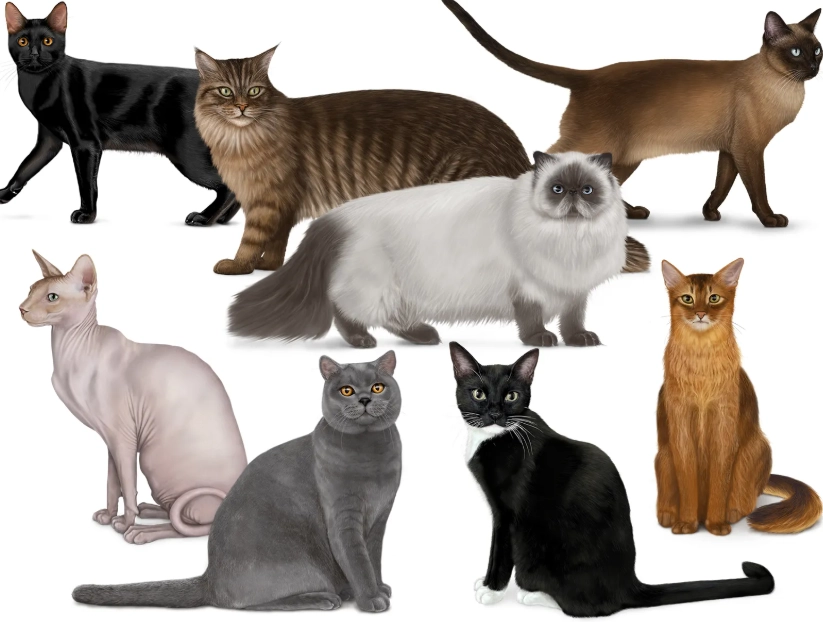
The Big Split: Understanding the Two Main Branches of Felidae
Scientists love to categorize things, and cat species are no exception. Based on genetics and physical traits, the cat family is primarily divided into two subfamilies. This isn't just academic hair-splitting; it reflects a deep evolutionary history that shaped how these animals roar, purr, and live.
The Pantherinae: The Big Cats That (Mostly) Roar
This is the glamorous crowd. The subfamily Pantherinae contains most of the world's largest and most iconic felines. What truly sets them apart anatomically is a specialized hyoid bone in their throat, which gives them the ability to produce that earth-shaking roar (with one famous exception we'll get to). Their vocal prowess isn't their only trick; they also tend to have a different pupil shape (round versus the slit of smaller cats) and are often ambush hunters in forested or complex habitats.
The star members of this group include:
- The Lion (Panthera leo): The social cat. Unlike almost all other felines, lions live in prides. Seeing a male lion's mane in person is humbling—photos don't do the scale justice.
- The Tiger (Panthera tigris): The largest of all cat species, and a solitary powerhouse. Each tiger's stripe pattern is as unique as a human fingerprint.
- The Leopard (Panthera pardus): The ultimate adaptable climber and survivor. Pound for pound, one of the strongest cats, known for hauling massive kills into trees.
- The Jaguar (Panthera onca): The New World's apex predator. Stockier than a leopard, with a massively powerful bite designed to pierce turtle shells and skulls.
- The Snow Leopard (Panthera uncia): The mountain ghost. That thick tail isn't just for show—it's used for balance on cliffs and as a wrap-around scarf for warmth. It also can't roar like its larger cousins, which sometimes causes debate about its classification.
There's also the Clouded Leopard (Neofelis nebulosa) and Sunda Clouded Leopard (Neofelis diardi), which are considered the evolutionary link between the big roaring cats and the smaller felines. They have the longest canine teeth relative to their skull size of any cat—truly ancient-looking creatures.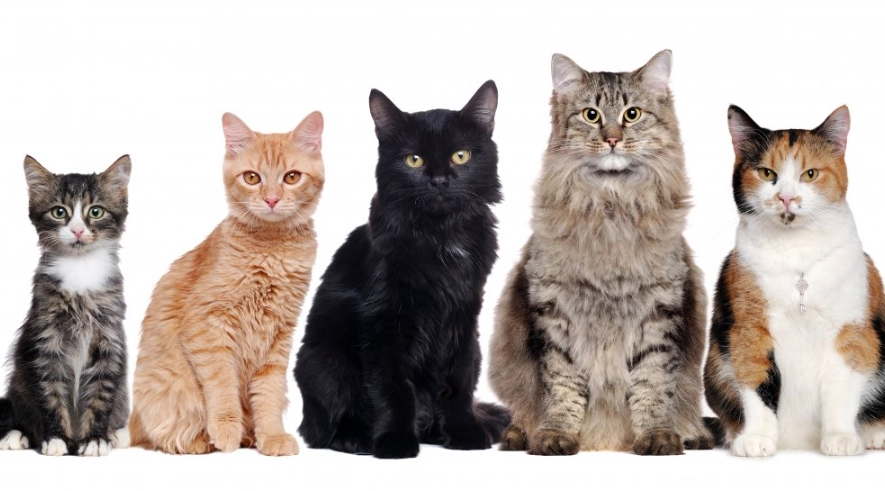
The Felinae: The Smaller Cats That Purr
This is where the diversity explodes. The Felinae subfamily contains the vast majority of cat species. They have a rigid hyoid bone, which allows for continuous purring (both in and out) but prevents the deep roar. This group includes everything from the speedy Cheetah to your house cat. Their habitats range from scorching deserts to dense rainforests to your local neighborhood.
This group is so large it's helpful to think about them in clusters:
I find the Felinae group endlessly more interesting than the big cats, precisely because of their variety. Everyone knows a tiger is impressive, but have you heard of the flat-headed cat? It's a weird, webbed-footed fish-eater from Southeast Asia. Now that's a conversation starter.
The Speed Demon: The Cheetah (Acinonyx jubatus) stands alone. Its non-retractable claws act like cleats for traction, and its entire body is built for explosive acceleration, not strength. It's a fragile specialist, and seeing one run is witnessing pure biomechanical art.
The Lynx Lineage: These cats are built for cold climates with their short tails, tufted ears, and huge, snowshoe-like paws. This group includes the Eurasian Lynx, Canadian Lynx, Iberian Lynx (one of the world's most endangered cats), and the Bobcat.
The Caracal Lineage: The graceful desert and savanna specialists. The Caracal itself is known for its incredible leaping ability to catch birds. The African Golden Cat and the elusive Serval, with its massive ears for detecting rodents in grass, also belong here.
The Leopard Cat Lineage: A huge and important Asian group. This includes the stunningly beautiful Asian Leopard Cat, which is the wild ancestor from which domestic cats were originally bred in ancient times. The Fishing Cat, a powerful swimmer, is another remarkable member.
The Puma Lineage: This one fascinates me because it contains the champion of nicknames. The Puma (Puma concolor), also called the Mountain Lion, Cougar, or Catamount, is an incredibly widespread American cat. It's the largest of the "small cats" that can purr. The much smaller Jaguarundi, which looks more like an otter than a cat, is its closest relative.
The Domestic Cat Lineage: Yes, our house cats belong to a specific lineage within Felinae! Their closest wild relatives are the African-Asian Wildcat (Felis lybica), the European Wildcat (Felis silvestris), and the Chinese Mountain Cat among others. This group, genus Felis, includes many of the small, spotted, and striped wildcats like the Sand Cat, the Black-footed Cat (the deadliest hunter of all cats by success rate), and the Jungle Cat.
So, when you look at your cat staring out the window, you're looking at a creature whose direct cousins are some of the toughest little survivors on the planet.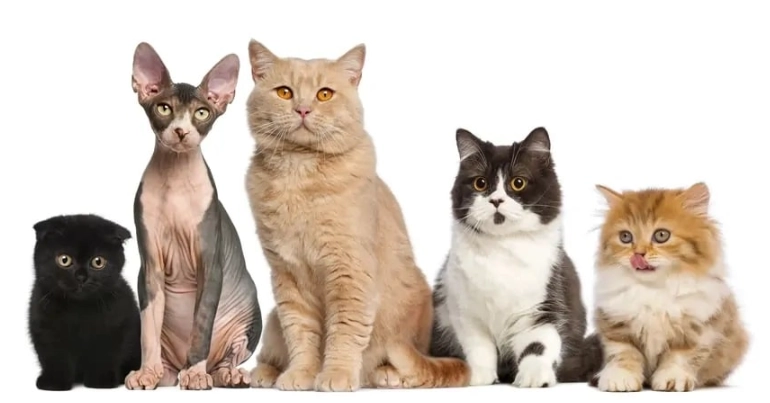
The Definitive List: All Living Cat Species at a Glance
Let's get concrete. Taxonomy can change with new genetic studies (the Ocelot lineage was recently rejiggered, for example), but the list below reflects a strong consensus from authorities like the IUCN Red List of Threatened Species and the Cat Specialist Group (CAT SG). It's the clearest answer to "what are all the types of species of cats?". I've organized it by the major groups we discussed.
| Common Name | Scientific Name | Subfamily | Key Trait | Conservation Status (IUCN) |
|---|---|---|---|---|
| Lion | Panthera leo | Pantherinae | Social pride life | Vulnerable |
| Tiger | Panthera tigris | Pantherinae | Largest cat; striped coat | Endangered |
| Leopard | Panthera pardus | Pantherinae | Highly adaptable climber | Vulnerable |
| Jaguar | Panthera onca | Pantherinae | Powerful bite; spots with dots | Near Threatened |
| Snow Leopard | Panthera uncia | Pantherinae | Thick-tailed mountain dweller | Vulnerable |
| Clouded Leopard | Neofelis nebulosa | Pantherinae | Longest canines relative to size | Vulnerable |
| Cheetah | Acinonyx jubatus | Felinae | Fastest land animal | Vulnerable |
| Cougar / Puma | Puma concolor | Felinae | Widest range of any American mammal | Least Concern |
| Lynx (Eurasian) | Lynx lynx | Felinae | Large, tuft-eared forest cat | Least Concern |
| Ocelot | Leopardus pardalis | Felinae | Beautifully marked medium-sized cat | Least Concern |
| Domestic Cat / Wildcat | Felis catus / Felis lybica | Felinae | Only domesticated cat species | Domestic: N/A, Wild: Least Concern |
| Sand Cat | Felis margarita | Felinae | Desert specialist, furry feet | Least Concern |
| Black-footed Cat | Felis nigripes | Felinae | Smallest African cat; deadly hunter | Vulnerable |
| Fishing Cat | Prionailurus viverrinus | Felinae | Powerful swimmer, eats fish | Vulnerable |
| Serval | Leptailurus serval | Felinae | Long legs, huge ears for hearing prey | Least Concern |
And that's just a selection. The full list includes marvels like the Borneo Bay Cat, the Andean Mountain Cat, the Marbled Cat, the Rusty-spotted Cat (possibly the world's smallest), and many more.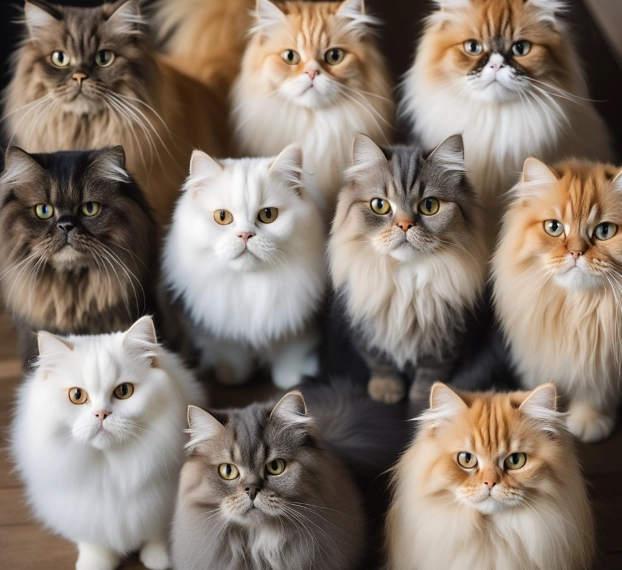
A Sobering Note: Look at that "Conservation Status" column. Very few of these types of species of cats are listed as "Least Concern." Habitat loss, poaching, and human-wildlife conflict are pushing most wild cat species toward decline. Understanding them is the first step toward caring about their survival. Organizations like Panthera work globally on their conservation.
Where Does My House Cat Fit In? The One Domestic Species
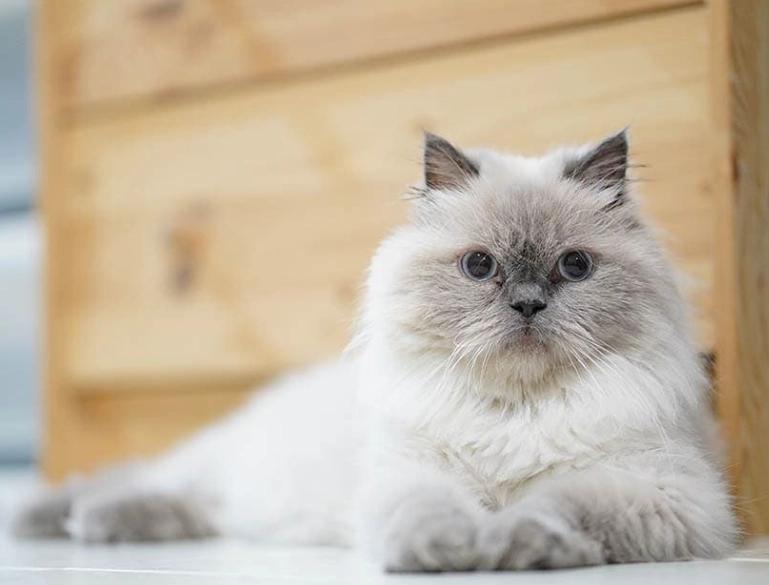
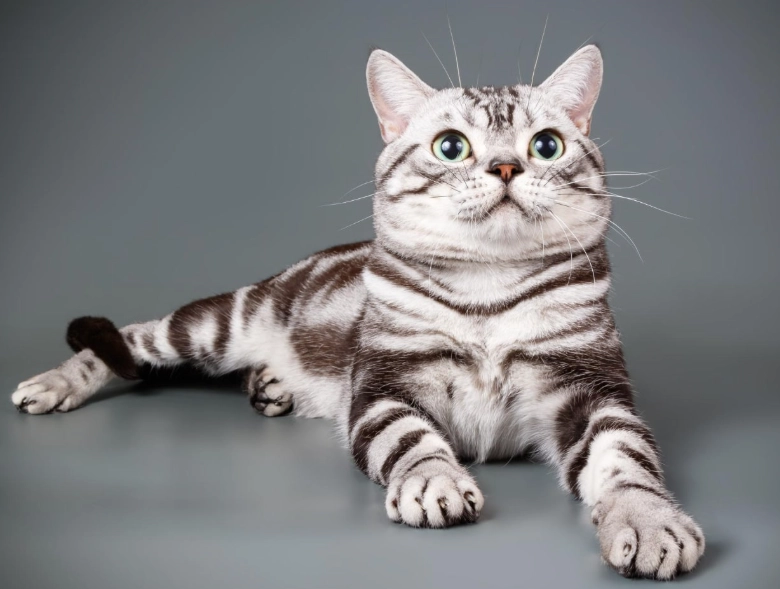
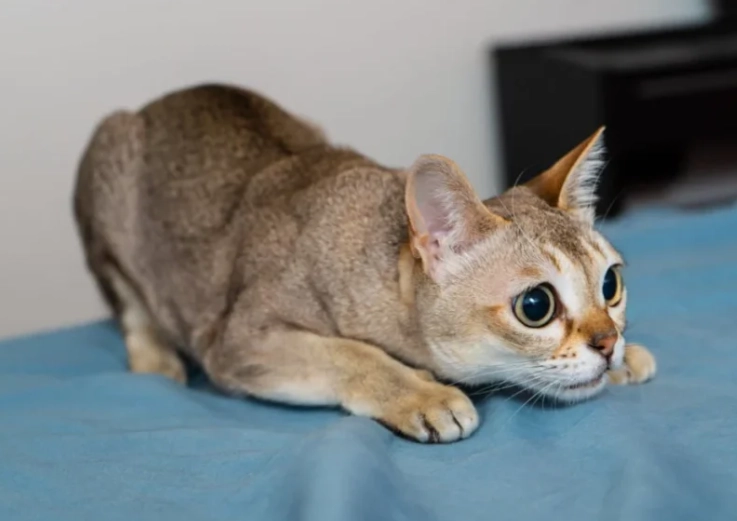
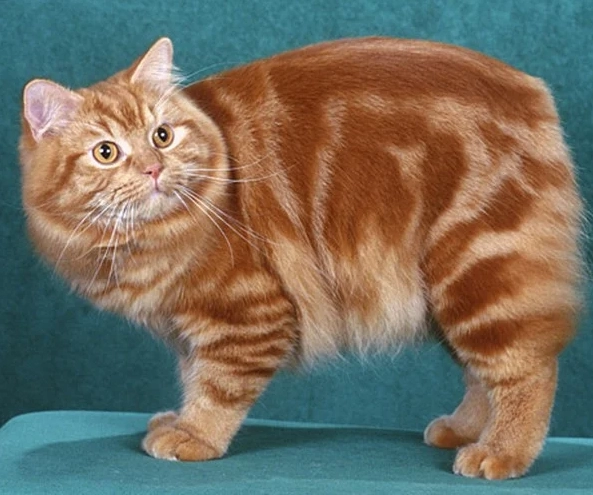
This is the part most cat owners care about. All domestic cats, regardless of whether they're a hairless Sphynx or a fluffy Ragdoll, belong to a single species: Felis catus. Genetically, they are so closely related to the African-Asian Wildcat (Felis lybica) that many taxonomists consider them a subspecies of it (Felis lybica catus).
The domestication process is thought to have begun in the Fertile Crescent around 10,000 years ago, as humans settled into farming communities. Grain stores attracted rodents, which attracted wildcats. The less fearful cats stuck around, and a mutualistic relationship began. It wasn't so much that humans tamed cats, but that cats chose to tolerate us for the steady food supply. Sounds about right, doesn't it?
What's incredible is how little the basic blueprint has changed. Compare your cat's skeleton to that of a wildcat—they're nearly identical. The main differences are social: domestic cats are more tolerant of other cats and humans, have a wider variety of coat colors and patterns (a result of relaxed natural selection), and retain kitten-like behaviors (neoteny) like meowing, which is largely used to communicate with us, not other adult cats.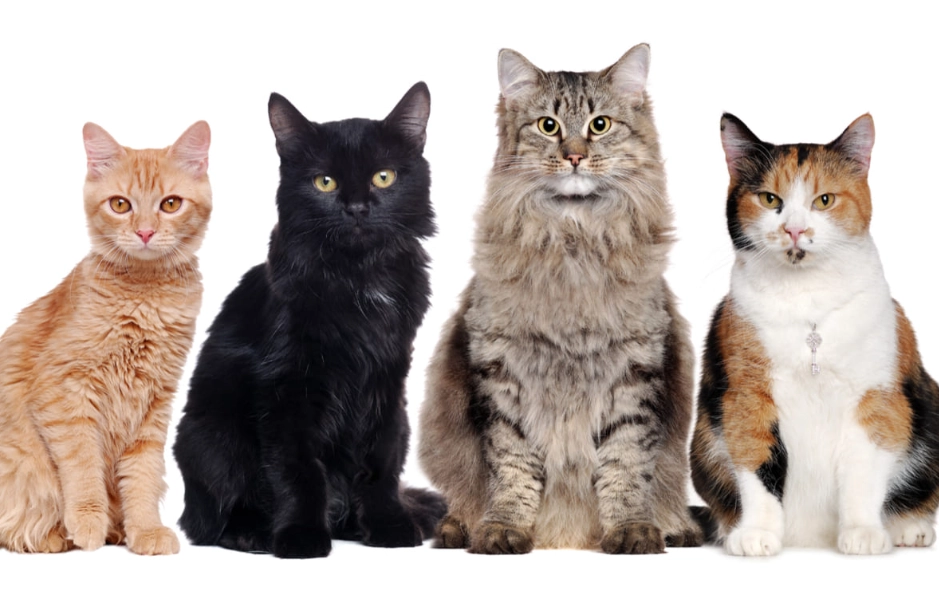
Why Can't a House Cat Breed with a Tiger?
A common question! It comes down to genetics. While all cats share a common ancestor, different species are separated by millions of years of evolution. Their chromosome numbers and structures are too different for successful reproduction. A lion and a tiger can sometimes produce hybrid offspring (ligers and tigons) because they are more closely related within the Panthera genus, but these hybrids are almost always sterile. The genetic gap between a domestic cat (Felinae) and any Pantherinae cat is a vast, uncrossable chasm.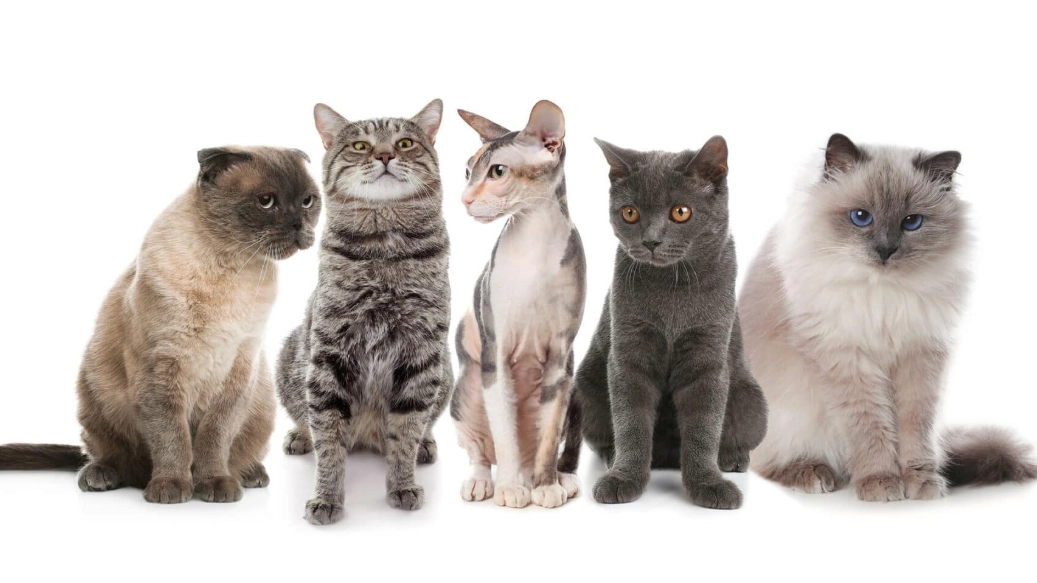
Answering Your Burning Questions About Cat Species
Over the years, I've heard and asked a ton of questions about this topic. Here are the ones that keep coming up.
The Bottom Line: Why Knowing Your Cat Species Matters
You might think this is all just trivia. But understanding the different types of species of cats does a few important things. It fosters a deeper appreciation for the natural world and the specific adaptations of each cat—the snow leopard's tail, the cheetah's claws, the fishing cat's webbed feet. It also highlights the precarious conservation status of most of these animals. Finally, it gives you a profound respect for the animal sharing your home. That little creature on your keyboard is a barely modified version of a supreme solitary predator, a walking testament to an ancient and successful family tree.
The next time someone asks you about "types of species of cats," you can tell them it's not a simple answer. It's a story of 40+ unique survivors, each perfectly tuned to its own slice of the planet, from the steaming jungles to the highest mountains to, yes, our living rooms. And that story is far more compelling than any simple list.
If you want to dive deeper into the science and conservation of any specific cat, I highly recommend starting with the IUCN Red List search for Felidae for the hard data on threats and populations, and the Felidae Conservation Fund's cat library for detailed species profiles. They do the on-the-ground work that keeps this amazing family from shrinking further.