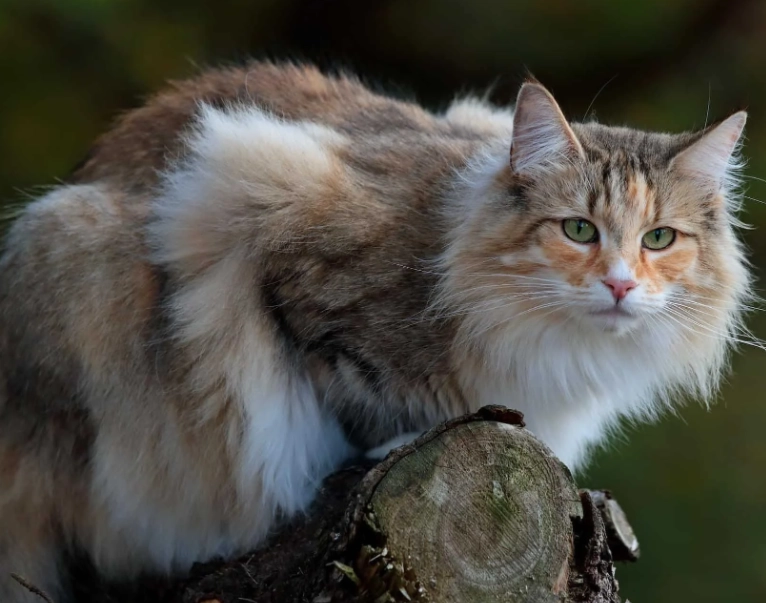
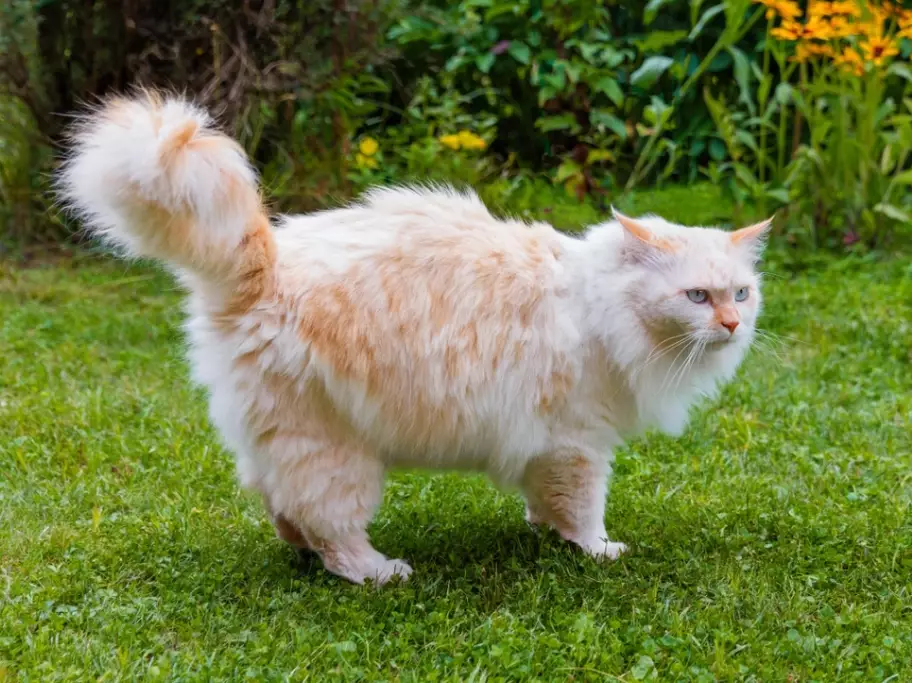
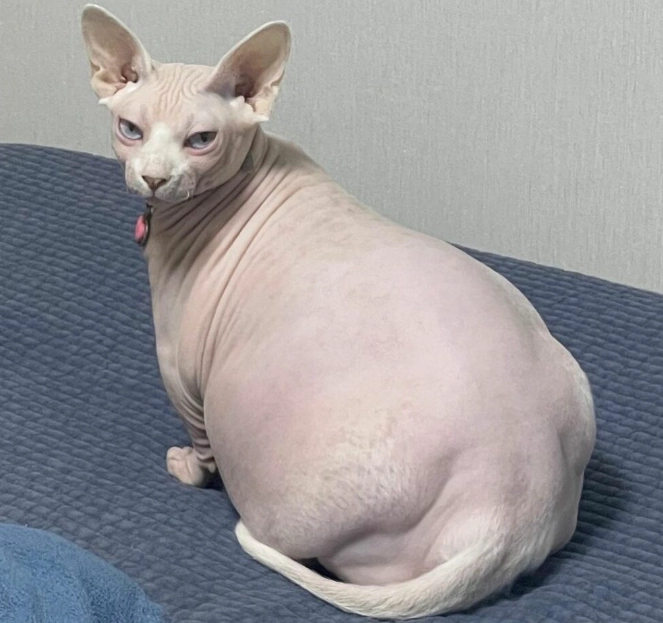
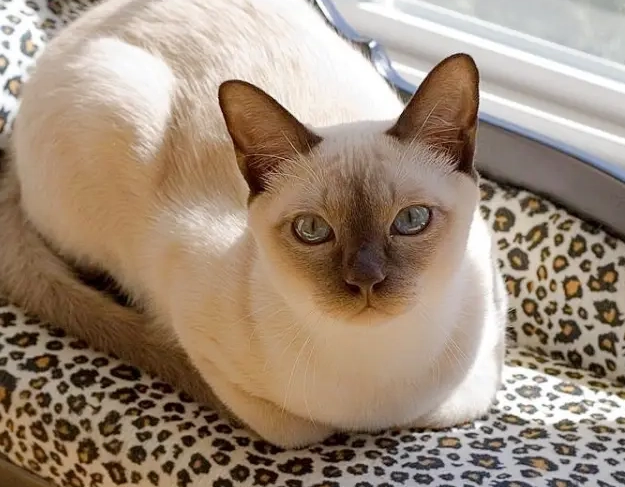
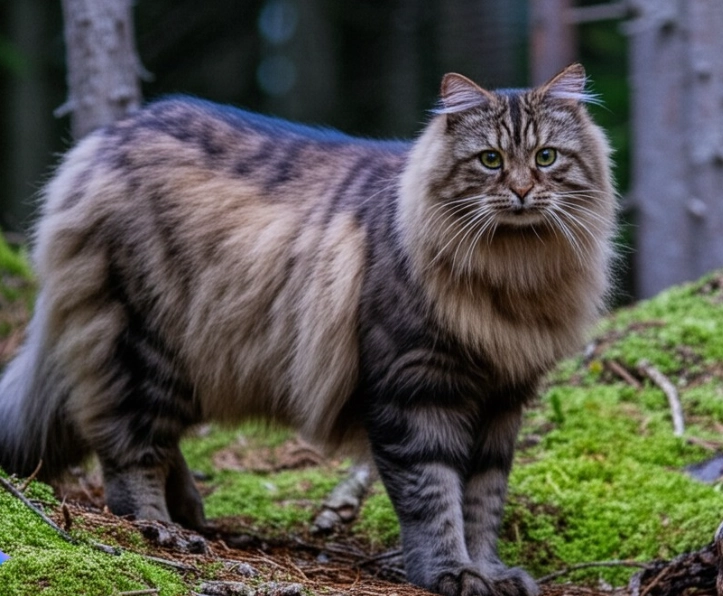
You look at your cat, with its sturdy build and sweet face, and the question pops up: is this a specific breed? Maybe you adopted from a shelter, or got your cat from a friend. That iconic image of the silver tabby from the cat food commercials is stuck in your head. Could your cat be one of those—an American Shorthair?
It's a common wonder. I've been around cats for years, and I've seen countless "maybe" American Shorthairs. The truth is, without official papers, you can't be 100% certain. But you can become a pretty good detective. This guide will walk you through the clues—the physical traits, the personality hints, and the official stuff. We'll also talk about why it even matters (or doesn't).
What’s Inside: Your Investigation Checklist
The Look: Key Physical Traits to Examine
Breed standards are specific. For the American Shorthair, organizations like The Cat Fanciers' Association (CFA) have a detailed blueprint. Let's break down what you're looking for. Grab your cat and observe—don't worry, they probably won't mind the extra attention.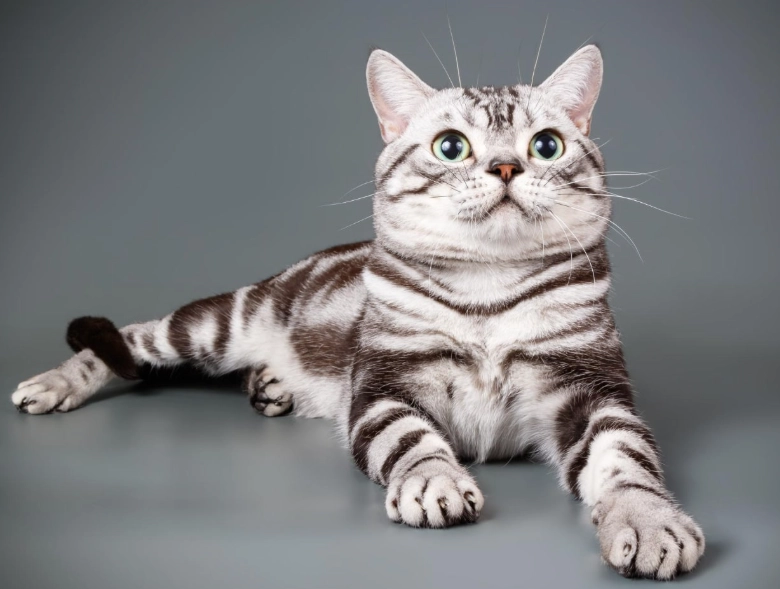
The Body: Built Like a Little Linebacker
This is the first big clue. American Shorthairs are not dainty. They are medium to large cats with a noticeable heft. Think solid, not fat. They have a powerful, muscular build that feels substantial when you pick them up. Males can weigh 11 to 15 pounds, females 8 to 12 pounds.
Their chest is full and well-developed. The legs are sturdy, of medium length, and in proportion to the body. Nothing spindly or overly long here. The overall impression is one of balance and strength, a cat built for endurance (historically, for hunting rodents on ships and farms).
The Head: Round, but Not Too Round
The head is crucial and where many people get tripped up. It's not just "a round head." It's a specific kind.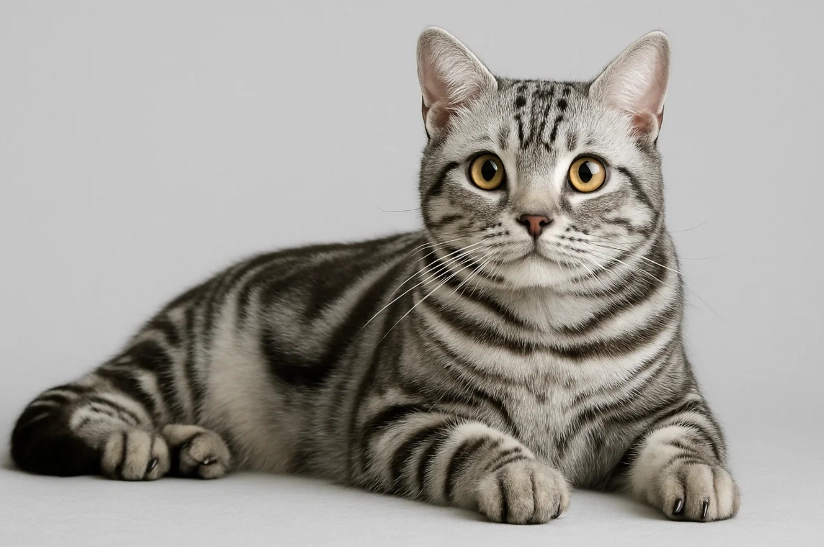
- Face: Full-cheeked and fairly broad. The muzzle is square, giving them a sometimes serious expression.
- Eyes: Large, round, and wide-set. The color depends on the coat—gold or green are common, but copper is linked to the famous silver coat.
- Ears: Medium-sized, slightly rounded at the tips, and set fairly wide apart on the head.
- Nose: Medium in length. There's a gentle curve from the bridge of the nose to the brow, not an extreme "stop" like a Persian.
It's a sweet, open expression. Not flat-faced, not pointy. Just pleasantly rounded.
The Coat: The Signature (But Misleading) Feature
Ah, the coat. This is where the biggest misconception lives.
Remember this: The classic silver tabby with black markings is just ONE of over 80 accepted colors and patterns. Your cat can be solid white, black, blue, cream, or have patterns like tabby, calico, tortoiseshell, or bicolor, and still fit the breed standard.
The texture is more telling than the color. An American Shorthair's coat is short, dense, and crisp. It should feel firm to the touch, not silky or fluffy. This dense undercoat is what protected them from the elements. It's weather-resistant. When you pet them against the grain, the coat should spring back into place easily.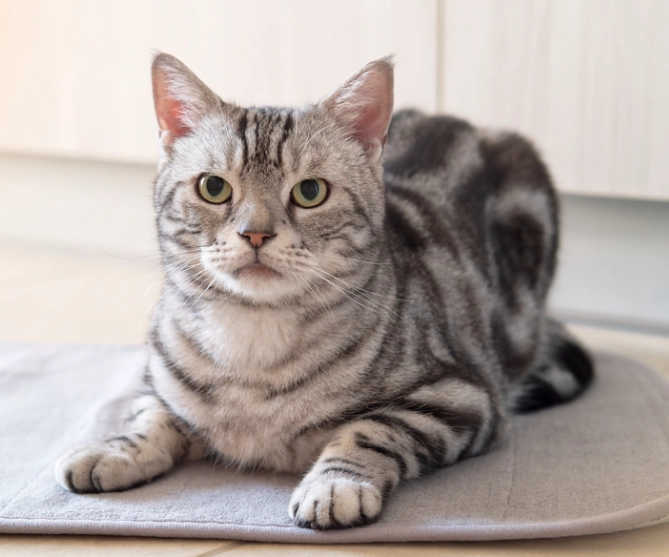
Personality & Behavior: More Than Just Looks
If looks can be ambiguous, personality adds another layer of evidence. American Shorthairs are bred to be companion animals, and their temperament reflects that.
They are famously even-tempered, adaptable, and affectionate without being clingy. They tend to get along well with children, dogs, and other cats. They're playful but not hyperactive, often content to be near you rather than on you. They're known for being quiet—not big talkers, though they might chirp or trill.
Here's an expert nuance I've noticed: many have a strong, quiet confidence. They aren't typically skittish. A sudden noise might make them look, but not necessarily bolt under the bed. This steadiness is a hallmark.
Does your cat match this? It's a point in the "likely" column. But remember, environment shapes personality too. A rescued cat with a rough past might be more cautious, regardless of breed.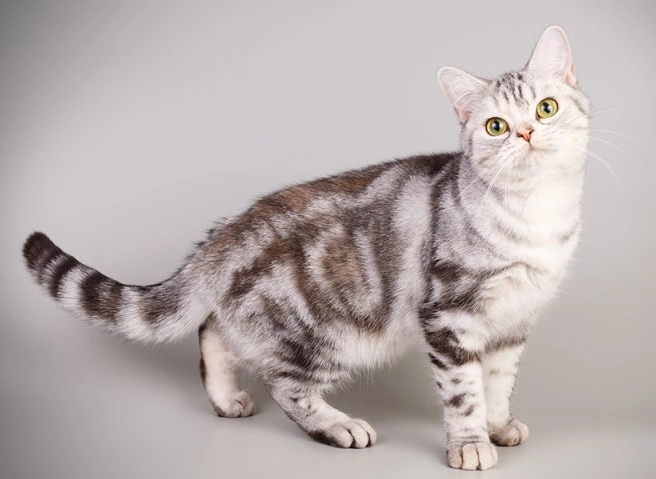
The Paper Trail: Official Proof vs. Guesswork
Let's be brutally honest for a second.
If you didn't get your cat from a registered breeder with a stack of documents, your cat is not officially an American Shorthair. In the eyes of registries like CFA, it's a Domestic Shorthair—which is the fancy term for a wonderful, non-pedigreed short-haired cat.
The only definitive proof is a pedigree registration certificate. This traces your cat's lineage back through many generations of registered cats. No papers, no purebred status. It's that simple.
What about cat DNA tests? Companies like Basepaws or Wisdom Panel can be fun. They can detect genetic markers associated with American Shorthair ancestry. They're useful for mixed-breed cats to see if there's some of that breed "in the mix." But for a purebred claim? They are not accepted substitutes for official pedigree papers in the cat fancy world. Think of them as an interesting ancestry report, not a birth certificate.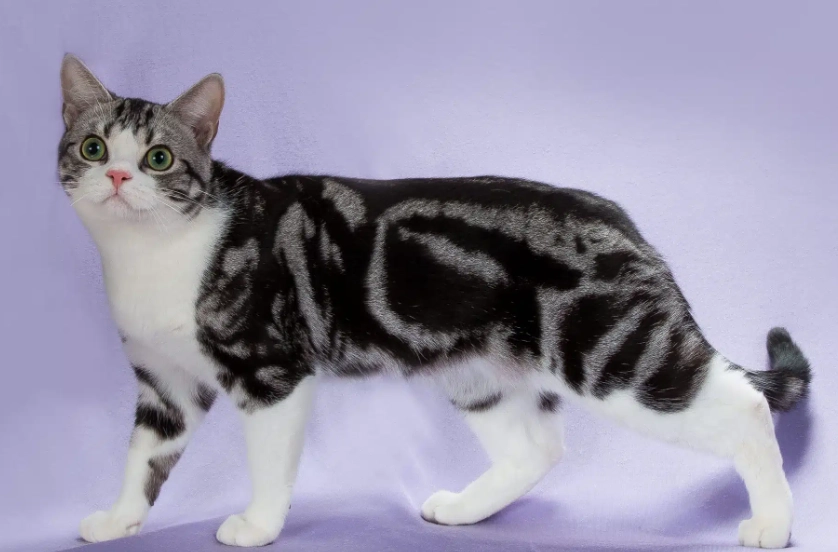
The Mixed-Breed Reality: When It’s Not So Clear
This is the most common scenario. Your cat has *some* of the traits, but not all. Maybe the body is right but the head is narrower. Maybe it's the perfect silver tabby but has a long, lanky body.
Your cat could very well have an American Shorthair in its recent family tree. Genes mix in unpredictable ways. A cat might inherit the coat pattern from one parent and the body type of another.
To help visualize the difference, here’s a quick comparison:
| Trait | American Shorthair (Breed Standard) | Domestic Shorthair (Mixed Breed) |
|---|---|---|
| Build | Consistently stocky, muscular, medium-to-large. | Highly variable: can be lanky, cobby, or average. |
| Head Shape | Consistently full-cheeked, broad, with a square muzzle. | Variable: can be wedge-shaped, narrow, or round. |
| Coat Texture | Dense, crisp, and uniform. | Can vary from thin to thick, silky to coarse. |
| Pedigree | Documented lineage from registered parents. | Unknown ancestry. |
| Commonality | Less common; acquired through specific breeders. | Extremely common; most cats in shelters/homes. |
Embrace the mix! It's what makes most cats unique. The desire to label them often says more about our love for the breed's image than anything wrong with our perfect pet.
Putting It All Together: Your Likelihood Score
So, how do you know? You make an educated guess based on evidence.
High Likelihood: Your cat matches *most* physical traits (stocky build, round broad head, dense coat), has the easygoing personality, AND you have registration papers. Congratulations, you have an American Shorthair!
Possible Ancestry: Your cat matches several key physical traits and the temperament. It looks and acts the part, but there are no papers. You likely have a Domestic Shorthair that strongly resembles the breed, or may have some in its ancestry. This is a very common and wonderful outcome.
Unlikely: Your cat is long and slender, has a triangular face, a silky coat, or is extremely vocal and clingy. It's probably not closely related to the breed, regardless of its coat color.
At the end of the day, the label matters less than we think. Whether your cat is a card-carrying American Shorthair or a beloved domestic mix, they're a companion. The traits we admire in the breed—health, hardiness, a sweet nature—are often found in mixed breeds too.
The quest to identify them is fun. It connects us to their history and helps us understand them a bit better. But the answer, paper or no paper, doesn't change the purrs on your lap.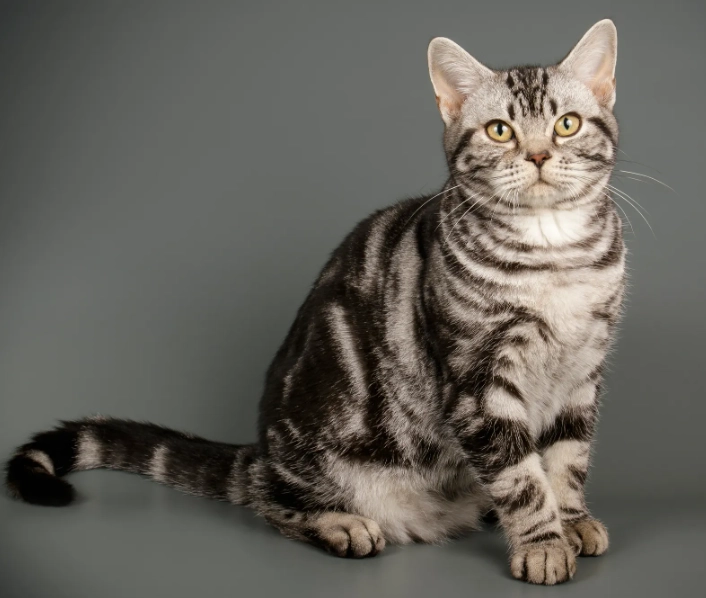
Your Questions, Straight Answers
Can a cat be part American Shorthair without looking like one?
Absolutely. Genetics are complex. A cat with one American Shorthair parent might inherit very few of the breed's classic physical traits. It could have a different coat pattern, a less stocky build, or a longer nose. The personality traits, like a generally adaptable and good-natured temperament, are sometimes a stronger clue than looks alone in a mixed-breed scenario.
Is a silver tabby always an American Shorthair?
This is a huge misconception. The iconic silver (or brown) classic tabby pattern is the breed's poster child, but it's just one of over 80 accepted colors and patterns. Many domestic shorthair cats are also silver tabbies. So, while a silver tabby *could* be an American Shorthair, the pattern alone is not proof. You need to look at the totality of features: the build, head shape, coat texture, and overall demeanor.
What's the most reliable way to know for sure if my cat is purebred?
There is only one definitive method: registration papers from a reputable cat registry like The Cat Fanciers' Association (CFA) or The International Cat Association (TICA). These papers trace your cat's lineage back through registered parents. Without this documentation, even a cat that looks like a textbook example is technically considered a domestic shorthair. A DNA test can indicate breed ancestry markers, but it's not a substitute for official pedigree papers in the purebred world.
Does it matter if my cat isn't a purebred American Shorthair?
For health and companionship, not at all. A loving domestic shorthair is just as wonderful. The importance is mainly for breeders selling cats with specific guarantees, or for owners who plan to show their cat in pedigree competitions. Knowing a potential breed background can sometimes offer clues about general health predispositions or personality tendencies, but every cat is an individual. The bond you share is what truly matters.